January 2025 Global Brand Letter posts today
This year's letter available now here:
https://www.diganzi.com/docs/2025GlobalBrandLetter-JanuaryEdition.pdf


posted by Stanley at 10:07 AM


A series of random postings about world travels and adventures in the luxury category, by Stanley Moss, Travel Editor for Lucire, a New Zealand-based fashion magazine.
This year's letter available now here:
https://www.diganzi.com/docs/2025GlobalBrandLetter-JanuaryEdition.pdf
posted by Stanley at 10:07 AM
My esteemed colleague Jack Yan, brand guru par excellence, publishes the yearly Autocade yearbook, an outstanding in-depth peek at vehicular trends. This season - to coincide with the release of his newest edition - I've asked him to contribute a blog about Jaguar's abrupt volte-face from his very informed perspective. His text follows:
Jaguar Land Rover announced some time back that it didn’t see Land Rover as a brand any more. It would rather we think of Defender and Discovery as brands, just as do with Range Rover. Jaguar, it said, would no longer chase BMW and Mercedes-Benz volumes, but be something rather more exclusive. Britain itself would see its car-making numbers drop with ripple effects through the wider economy …
But is it that simple? While Range Rover has indeed existed for most of its history without Land Rover—for years it was part of Rover itself, before the green badge appeared on the grille as a form of endorsement—it’s hard to think of Defender and Discovery without their Land Rover roots. British Leyland tried marqueless cars from time to time: Maxi, Princess, even Maestro and Montego … and the only one that really graduated into marquedom was Mini. Parent company Tata’s “house of brands” is a gamble.
And Jaguar—can it really extend upmarket after years of being forced downmarket? Tata sees it as the next Bentley.
Certainly the new materials signal a massive departure from the past. We know Jaguar was forced to cancel its earlier XJ successor, in favour of a more ambitious EV, and it seems the new car won’t have much of a connection to the past.
Jaguar could only trade off its heritage for so long, something which only served to keep its median purchaser age high in the 1990s. The compact X-type of the late 1990s was, at best, an abbreviated Jaguar, almost a pastiche. It was only after the arrival of Ian Callum that Jaguar began having an eye on the future, and the last XJ was meant to signal a future in ‘beautiful, fast cars’. The brand and its symbols gently evolved: this was the same Jaguar history, but added chapters; the same storied past but packaged with greater modernity.
It was like that other British brand, James Bond, through the 1990s and early 2000s: Pierce Brosnan might be driving an invisible Aston Martin in his last outing, but rest assured, this was supposed to be the same cinematic James Bond that started in 1962.
Then came a reboot.
Jaguar is in the same boat. Its Callum design language has come to a close. It is time for a reinvention. The last time it did something like this was with the XJ-S in 1975. And those proved difficult to shift, not just because there was an OPEC embargo on.
The symbols are all new. The leaper appears with 16 horizontal lines, broken at places to form the sign of the cat. A 1980s video game motif? Or a signal to say that the ghost of Jaguar is here … but it’s not the Jaguar of old.
Maybe this is all right. It’s not a retro future then.
Then the logotype. Looking like Herbert Bayer’s Universal Alphabet, the Jaguar script is in a mixed upper- and lower-case, but all at the same height—think Bodoni No. 26. To heck with tradition. Childish or daring? Certainly a departure, with no Jaguar script ever looking like this.
Then there’s the new symbol of the two Js, one inverted (or it could be an r). Gone is the growler, the face of the Jaguar. Easy to draw for a child, like the three-pointed star of Mercedes-Benz. If the exclusivity that fashion brands convey is what Jaguar is trying to get at, then maybe there is a parallel with the linked Gs of Gucci or the linked Cs of Chanel. Except both came through a natural creative process. They evoke the era in which they were created. It’s difficult not to be cynical.
Jaguar promises its new limousine will be bought because of its styling, a car likely to have dramatic front and rear wings, eschewing the aerodynamicism of China’s Geely Galaxys, Zeekrs and Stelatos. Never mind the electric powertrain, it has a long bonnet. It’s going against trends, but then, has Jaguar—the true, innovative Jaguar from the 1940s to the 1960s—ever gone with them? It’s always blazed its own trail.
But Jaguar—which hasn’t had the best track record when it comes to quality—got away with a lot of it by being well priced. Not this Jaguar, priced at roughly double its current range’s numbers. Jaguar expects 85 to 90 per cent of its customer base to vanish. We expect the same customer base to be fashion-fickle, and that Jaguar isn’t on to the next XJ, but the next Aston Martin Lagonda. The wedge one. Super-exclusive but not as timeless as they might think.
All we can safely say, without seeing the product and the marketing mix, is that it’s a high-risk strategy. History isn’t on Jaguar’s side, but then, history has run its course for the brand. Indeed, to quote one of Jaguar’s former owners’ founders, history is bunk. And certainly, the Jaguar of 2026–7 doesn’t have much need for all that equity.
posted by Stanley at 4:06 AM

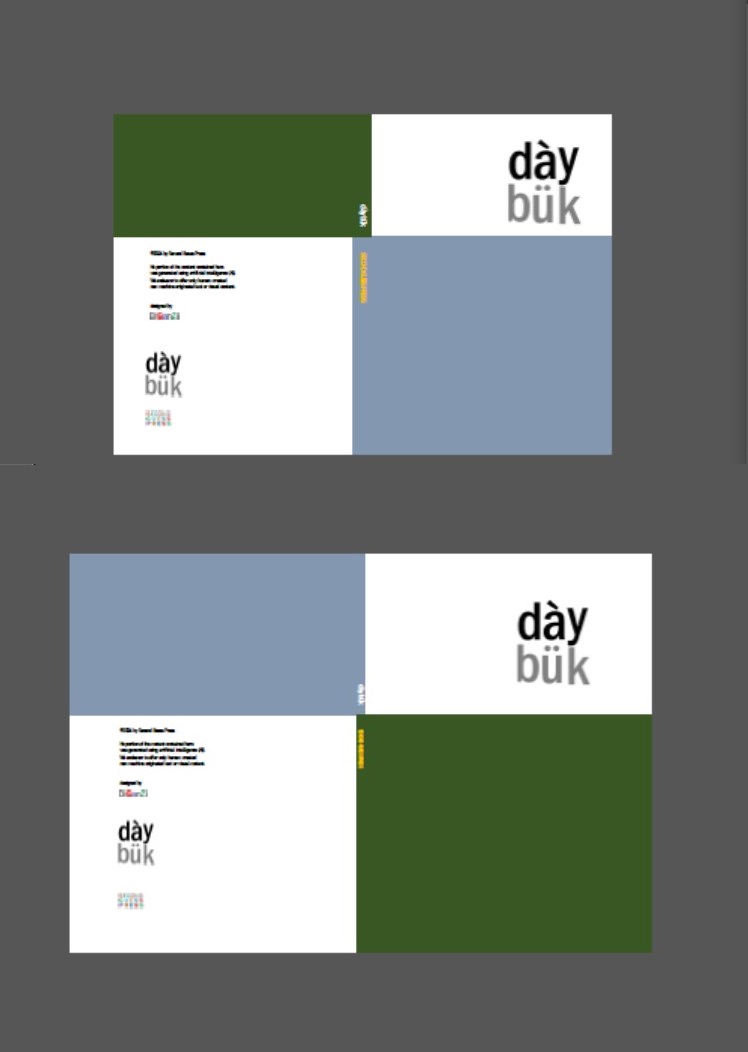
Second Guess Press is beta-testing a new line
of highly functional, affordable notebooks, designed for desktop, pocket,
handbag and backpack. The line, which will launch under the brand name dày bük in Fall 2024, features minimal graphic design,
spacious pages with elemental grids, and no superfluous messaging. The brand
and designs will be available for international license.
“I never saw a notebook whose dimensions were
just right for me, which eschewed a lot of typographic confusion and was
attractively priced. Overdesign, unnecessary visual distractions and
unattractive cost was always the case. dày bük aspires to meet the everyday needs of
busy people: functional, beautiful, economic, easy to use,” said Stanley Moss,
the line’s designer and principal of DiGanZi, a brand advisory.
Prototype versions are currently available on special order, but final product is not expected until September. “Now we’re ironing out the last details before scaling up production,” Moss says. “It will be worth the wait.”

posted by Stanley at 4:31 PM
The latest dispatches from brand-world, including a new chart, vocabulary and assorted snark.
https://www.diganzi.com/docs/2024GlobalBrandLetterJanuaryEdition.pdf


posted by Stanley at 9:44 AM
Dear Friends
Welcome to the 23rd Brand Letter.
You can read the full text below, or visit http://www.diganzi.com/articles.html for a full archive of letters dating back to 2004
2022 Global Brand Letter June Edition
"I am losing precious days. I am degenerating into a machine for making money. I am learning nothing in this trivial world of men. I must break away and get out into the mountains to learn the news." - John Muir
Smash cut to a false narrative which permabans profit with purpose. Let’s not engage in de-platforming denialism or kratom-induced wacktivism. A monkeypox on your houses, BAYC. You can’t get me to join The Great Resignation. Forget code-switching. I’m up to my ears in Greenium. There will be no dimensionality, no impact investing, only integrated clienteling.
“This is the most important interview
of all time, it solves the human condition & ends all the turmoil &
suffering in the world & finally makes sense of our lives.” - internet ad
line
Advertising
Department
of Exponential Buyer Beware: 1.5bn product reviews are
received by Amazon each year. In
2020 the well-meaning colossus stopped more than 200 million suspected fakes. A
glut of suspicious reviews continue to regularly post in stores on eBay,
Walmart and Etsy. Amazon sued the two major review brokers who engage in overt
robotic algorithmic exploitation. Follow the money: who benefits?
In an Egyptian tv ad for Citroën featuring a pop star, the driver uses his car’s camera to
photograph a woman crossing the street, without her consent. The commercial
concludes with them driving away together. Apparently the agency hadn’t read
the research available, which indicates 98% of Egyptian women reported getting
harassed at some point in their lives, or a UN study that 83% of Egyptian women
did not feel safe or secure in the streets. The ad was withdrawn, with apology.
It’s misleading to believe that taking an unsolicited picture from your car in
Cairo could lead to a date. Instead, men could face imprisonment.
The FAA revoked the licenses of two flying
aces who attempted a daredevil switcheroo over the Arizona desert. The stunt,
live streamed on Hulu, had no spectators present, and no one was injured. Red Bull Air Force, a sponsored team
specializing in aerial tomfoolery, trusted that the pilots could swap cockpits
midair during synchronized nosedives at 14,000 feet. Oops, one of the Cessna
182 planes crashed, only the other returned. The FAA had earlier denied a
request to exempt the pilots from regulations, and fined the squadron leader
$4932 for abandoning his pilot seat and operating a plane in a careless and
reckless manner. Red Bull called the stunt “partially accomplished”, the
license revocations a matter between the agency and the pilots, and said the
company looked forward to its continued friendship with them.
Brand misfire, from the founder’s bio on the
website of the company who built the automatic rifle used by the Uvalde
elementary school shooter. “Daniel Defense got its start because
Marty’s golf game sucked. He would spend most of his free time unwinding on the
golf course, until the day a friend invited him to shoot his AR. Every shot he
fired filled him with a satisfaction he’d never before experienced. Marty would
purchase his first AR this same year.”
"Hell is lowering your standards
and getting comfortable with it." -
Bette Davis
AI
Surveillance capitalism will soon further
enlarge its footprint in the marketplace. On track to reach 100 billion facial
photos in its database within a year, Clearview
AI plans a massive expansion beyond the law enforcement category into
virgin territory. Potential new intrusions into your private life: monitoring the gig economy; gait analysis, that is, identifying someone based on how they walk;
your location, even if not disclosed,
detected from a photo you’ve innocently posted; fingerprints, scanned from afar.
“Delusions of grandeur are especially
infectious for the semigrand.” - Walter Yetnikoff
Celebrity
When Gap revealed a multi-year collaboration
with billionaire rapper Kanye West
in June 2020, its shares rose wildly. Ye, as he prefers to be known, contracted
to design a line of apparel. He brought a link with street wear, connections
with high fashion from his crossover deal with Balenciaga and added value with
Yeezy, his footwear partnership with Adidas. But high profile problems surfaced
as the musician’s messianic persona soon overshadowed any collaboration. He was
suspended from IG after directing a racial slur at popular talk show host
Trevor Noah, made bitter remarks concerning his ex-wife Kim Kardashian and her
boyfriend, was canceled from a Grammy appearance, and a change.org petition
which received 40k signatures called for the Coachella festival to drop him as
a headliner. Gap shares slipped. The parent brand operates in the mid-market
retail apparel segment and their target consumers are already squeezed by
inflation. Proof positive that sometimes a celebrity tie-in isn’t enough to
automatically make a brand cool or profitable again.
“This is funny.” - Doc Holliday’s last
words
Epiphanies
AN EXTRAORDINARY POST-PANDEMIC
INVESTIGATION INTO CONSUMER FOOD BEHAVIOR
In the face of a global food crisis, you’re witnessing a scramble in the mass food
category to build relevance, sustain and extend market share for iconic brands. It’s a response to
COVID-related supply chain disruptions combined with massive transformations
which appeared over the last two years in how cloistered people got their
information about brands. Hence you’ll see many unconventional, bizarre, and
incongruous collaborations and rebrandings designed to capture attention in
social media feeds. This wave of rebranding characterizes post-pandemic
reinvention in many industries. The messages combine whimsy and consumer
interest and must stand out among celebrity videos, funny memes and
eye-catching tweets. Another result is that a glut of challenger brands - that
is, smaller brands trying to disrupt existing niches - joined the fracas.
POP
QUIZ
Guess
the extension, new product category or partner for these established iconic
brands:
1.
Hormel Spam
The
mysterious globally-known lunch meat attached its brand to Hasbro’s Yahtzee board game
2.
Jelly Belly Candy Co.
Provided
signature color options for 5 new Reebok shoe
styles
3.
Oscar Mayer Bologna
Partnered
with Korean skincare company Seoul Mamas to create a replica bologna moisturizing face mask
4.
Kraft Heinz Macaroni & Cheese
Developed
an m&c flavored ice cream with
Van Leeuwen
5.
Green Giant
Created
cauliflower-flavored marshmallow bunnies with Peeps candy brand
6. Oreo
Lent
its name and image to Dollar General branded
housewares
7. Grey
Poupon
Ubiquitous
mustard offered wine under its brand
identity
8. Taco
Bell
Fast
food giant launched Jalapeño Noir flavored wine
9.
Arby’s
Restaurant
chain introduced Curly Fry-flavored vodka
10. Old
Bay
Added
their proprietary food seasoning flavor to a branded vodka
The nostalgic 81-year old M&M’s candy brand revamped its mascots to better appeal to a
new consumer base, Gen Z customers. The snack candy beloved in entitled rock
star dressing rooms was given a makeover to express a less anxious, less sexy,
genderless, more inclusive, welcoming and unifying brand identity. Green cast
off high-heeled go-go boots, traded them in for cool, laid-back sneakers, gained
confidence. Brown, the brainiac, put on sensible pumps. Yellow is no longer a
ditz, and Orange adopted a sunny outlook.
Hostess
Brands, a junk food phoenix, saw resurrection thanks
to nostalgic brand advocates and new VC ownership. In its second incarnation
the producer of Twinkies and Ding-Dongs perceives increased threat from better-for-you food competitors.
Sales growth of plant-based foods showed signs of slowing in 2021. While brand
awareness remains high, trends did not favor the category: the pandemic brought
along diminished focus on health-oriented eating choices. The market opted for
comfort foods. A joint venture between PepsiCo and Beyond Meat is about to
inject more promotion dollars into the category.
With $300bn in global sales, the natural foods category sought unnatural
partnerships. Hoping to replicate the success of Patagonia Provisions’ line of
sustainable pantry items like smoked venison links and cacao-goji power snacks,
Reese’s Pieces and Heath Bars plan healthy brittle product launches. Cartoon
franchise SpongeBob will dive into purified water. Incredibles and Toy Story
plan to animate new trail mix brands.
The first wave of Big Food cannabis-infused beverages came to
market. Pabst Blue Ribbon High Seltzer and Molson Coors ignited competition
with 10-year old natural carbonated drink brand Jones Soda Company, who
launched their new Mary Jones line,
get it? The emerging problem in the industry is a new flavor of brand
hijacking, cannabis-infused copycats across all categories. What resembled
commercial gummy candies made by Nestlé - actually THC candies - were
accidentally given out in food boxes to 63 people at a Utah food bank,
resulting in hospitalized children. Nobody perished from overdose. Copycat
packaging of this type (Double Stuff
Stoneos) caused major food brands to call on Congress to do more to prevent
proliferation of products that mimic well-known brands. Many of the
marijuana-infused products are sold online, thus harder to regulate or shut
down.
Food delivery services like Door Dash,
Deliveroo and Uber Eats were nourished during the pandemic. The popularity of
in-home dining fostered ghost kitchens, which
take online orders and prepare the meals in kitchen-equipped trailers. They
situate in temporary unused spaces like parking lots. It’s a made-to-order
means of brand recognition. Celebrity-based businesses rushed into the space. Wendy’s, which operates 7000 full-serve restaurants in 31 countries, plans
to open 200 mobile branded locations to fulfill orders.
AND NOW BACK TO OUR REGULAR
PROGRAMMING
Look for more counterintuitive pairings, especially in fashion. Designers and
brands gravitate toward associations with celebs, crazes and causes that boast
big pre-existing fan numbers. Couture brands view content as another form of
art, and issue limited editions largely sold online that encourage a perception
of urgency among consumers. Limited quantities and choreographed product drops
create a sense of scarcity. The popular online game Fortnite released an eyewear line, with 2 styles featuring blue
light filter lenses that enable long-duration screen play.
The 1997 Think
Different ad campaign by Chiat/Day for Apple
started the trend of marketing individualism, though it was intended to counter
the Think campaign run by competitor
IBM.
The current, oversaturated Audemars Piguet Icons campaign continues that thread, touting humility as the prime
virtue. Moncler has paused the Genius ad program, returned strategic
focus to their main collection, planned a push into technical apparel, and will
innovate D2C retail. Genius is slated
for relaunch next year with a focus on Gen Z customers.
A new interactive attraction has opened at the
Legoland California theme park which
enables you to build, test and race your own LEGO Ferrari.
There wasn’t a dry eye in automotive luxury
when the cargo ship Felicity Ace
caught fire and sank between the Azores and Portugal on March 1. Over 4000
luxury vehicles among them Porsches, Bentleys, high end VW EVs and bespoke
Lamborghinis now garage 2 miles below the surface of the Atlantic Ocean. It’s
suspected that the fire started in electric car batteries. Estimated insurance
damages $400m, but speculation that fraud is involved. The ship rests outside
Portuguese jurisdiction and underwater salvage would be costly and complicated.
Showrooms across the USA thrash about to meet demand for vehicles.
You’ve
heard of Meng 萌 culture? It
translates as “cute” in Chinese. In the West, precious, cartoon-inspired
designs are only meant for the eyes of children and not adults, who buy luxury
to feed their hungry souls. But in Meng-influenced China, cute designs have
appeal to both children and young adults. According to the Meng rhetoric,
appearing pretty and harmless is the ultimate form of sexiness. This preference
for childlike cuteness is the opposite of the typical ideals portrayed in
Western luxury advertising, which center on maturity, sophistication, and
seduction. The
Beijing 2022 Games’ official mascot, Bing
Dwen Dwen, a Meng-ish panda wearing an icy body shell, went viral in China.
Alert to the local preference for cuddly things, Games organizers called for “one
Dwen at each family.” In Beijing people obeyed, and stood for 5 hours in a
slow-moving 900 foot line outside the licensed flagship store. Cuteness
has become a key to local Gen Z and millennial marketing. As Meng culture
extends its influence beyond China in this interconnected world, will brands
that swap glam for cute have an edge in the Gen-Z market?
Легенда гласит, что производство началось в Ленинграде в
1943 году. В 1972-м «Столичная» стала первой водкой премиум-класса,
импортированной в США и поступившей в продажу под рекламным слоганом “Только
водка из России - настоящая русская водка!” Пациенты с Мэдисон-авеню покупали
ее по непомерной цене как обезболивающее средство, которое они предпочитали
всем прочим. После конфликта с российской властью (или олигархами, или Путиным)
– свидетельства расходятся - основатель Юрий Шефлер отправился в добровольное
изгнание и перенес производство в Латвию. После начала специальной военной
операции России в 2022 году, бренд хочет выступать за мир в Европе и
солидарность с Украиной, а в производстве использует только словацкое сырье. В
следующий раз, заказывая коктейль мартини, просто просите Stoli, ребрендированную в настоящую 100% нерусскую водку.
Legend
has it that production began in Leningrad in 1943. In 1972 it became the first
premium vodka to be imported to the USA, marketed under the slogan “Only vodka
from Russia is genuine Russian vodka!” Exorbitantly priced, it was the
preferred anesthetic for Madison Avenue admen. After a dispute with the Russian
state or oligarchs or Putin - accounts differ - founder Yuri Shefler
self-exiled and moved production to Latvia. Following Russia’s 2022 special
military operation, the label wishes to stand for peace in Europe, solidarity
with Ukraine, made from only Slovakian sources. The next time you order a
martini, simply ask for Stoli,
rebranded as the genuine 100% non-Russian vodka.
Russian translation by Dmitry
Petrov ptrpvlpetr@gmail.com
IP
Venture capitalists cite the hottest trending
business resales: content companies.
NFT
owners now seek to attach tangible value to virtual
tokens. World of Women (WoW), a
metaverse space, will sell licensed products like dolls, collectibles, figures,
costumes and accessories based on its NFT designs, online and in
brick-and-mortar stores. They’re also setting up film and tv deals. Bored Ape Yacht Club opens a restaurant
in LA, Bored and Hungry, a pop-up location. Food
Fighters Universe announced the first NFT-backed restaurant group to exist
in both the Web3 digital world and in the physical world. “You’ll be able to do
things in the metaverse that you can’t do in real life,” the founder said, but
did not divulge details. In NYC, The
Flyfish Club requires the purchase of a $3400 NFT for membership.
Why seek out the real thing when you can have
a location based experience? Immersive exhibition spaces promise
bespoke digital art experiences and refer to themselves as true cultural destinations. In the Sixties we called this stuff
light shows. Since its opening, French production company Culturespaces’
original van Gogh show in Paris has
drawn over 1.4 million visitors annually, average admission €15/person.
Animated 30-foot images from Vincent’s most famous paintings move around,
synchronized to an original score. This month in NYC, their first North American spectacle opens, an immersion into
the work of Klimt, in a renovated 33,000 square foot landmark building. The
same company also owns Frieze Art Fair. In Washington
DC, National Geographic presents an immersive experience which allows
audiences to enter the tomb of boy king Tutankhamun
while seated in rows of bright red VR chairs. In Las Vegas, a new escape room experience themed on the highest
grossing horror movie of all time “IT”,
a popular novel by Stephen King, intends to scare the daylights out of you and
your wallet. In addition to 20 interactive rooms, state of the art special FX,
lighting, animatronics and live actors, a retail store features photo
opportunities and exclusive jaw-dropping merchandise.
rückkehrunruhe - the feeling of returning home after an immersive trip only to find it
fading rapidly from your awareness
Once upon a time it was the song “White Christmas”. Now,
the world's most valuable copyright has got to be Baby Shark. The first video to ever reach 10 billion views on
YouTube sailed past “Despacito,” which had topped the charts in November 2020
with 7.7 billion views of its own, and now sulks in the distant #2 spot. The children’s anthem about a
juvenile elasmobranch, created by Pinkfong Company of Seoul, inspired a viral dance
challenge, topped music charts, launched an animated series on Nickelodeon,
dominated global merchandise licensing, has a forthcoming live world tour,
stars in its own interactive games, and can be found in multiple NFT forms. And
shows no signs of going away. Irving Berlin is turning over in his grave.
"I must also have a dark side if I am to be
whole." - Carl Jung
Metaverse
Garbology is a form of observational research which
studies consumption trends within a target population,
community or culture by analyzing its waste. A researcher at the University of Oregon
has spent hours wandering around the online game Animal Crossing, looking for
things people have thrown away - in cyberspace. A feature allows exploration of
virtual towns used by other players, and this quest searched for in-game items
that people had apparently lost or discarded. A new subdiscipline, call it meta-garbology, will create useful
metrics for the decline of civilization in the virtual rubbish space.
In the metaverse, you’ll never be lonely again. The days
of just sitting there playing by yourself are soon to be a thing of the past. Interaction and community are the big keywords, brands are the door openers that
fans use to communicate with their friends. Game companies love loosely
regulated in-game revenues. Relationships between video games and the metaverse
deepen. Hello Kitty licensed goods are already sold on Azerion’s platform
for multiplayer games. Soon you’ll be able to connect there with your very dear
friends Tinky, Winky and Dipsy, and for a limited time you may even run into
Dr. Who.
NFT technology has raced ahead of branding and trademark
protection. Already infringers started a land
rush of trademark claims in the metaverse. They are staking out homesteads
in in-game worlds, 3D virtual real estate, virtual music theme parks and
concert venues. In November two trademark applications were filed by third
parties for Gucci and Prada logos for metaverse-related graphic applications
including downloadable virtual goods, virtual worlds and clothing. A Wild West
mentality prevails.
Hermès
successfully sued artist Mason Rothschild after he sold an unlicensed
Birkin-inspired NFT artwork for $23,000. A 47-page complaint was submitted to
NY District Court. Digital dupes depict fur-covered bags shaped like the iconic
totes. The MetaBirkins bags, which retail for over $10,000 in the physical
world were first offered at $42,500 but there were no takers. NFTs depicting
fashion items have sold for millions in recent months. Balenciaga and Nike
experiment with virtual fashion. Questions remain about how trademark
protections for real world items will be enforced in the digital realm. Primary
responsibility in disputes is divided between the platform, the brand, and the
service provider.
Why infringe when you can simply counterfeit? OpenSea sells celebrity trading cards, collectibles,
other categories of NFTs. The
metaverse clearing house believes 80% of the items created using a tool it
offers for free were plagiarized works,
fake collections or spam. On OpenSea there are several variations of the
BoredApe theme using marks similar to the original, offered at significantly
lower prices and selling smaller quantities. The dubious works were created to
dodge bans from other marketplaces. Once again, legal thin ice. And uh-oh,
creation of NFTs is largely irreversible.
Obits
Tova
Borgnine, 80
She was the hypnotic, pitch perfect pitchwoman
who handily upstaged her chirpy co-hosts, a serial cosmetics entrepreneur and
home shopping promoter who found success with an exotic skin care line. The
fifth wife of actor Ernest Borgnine, her makeup boutique first catered to Las
Vegas showgirls. She married the Oscar-winning Borgnine in 1973, the fourth
time for her, and eventually published a book about how the marriage lasted.
She was a firm believer in pre-feminist marital values. In 1976 a syndicated
gossip columnist complimented her husband on his dewy complexion. In reply he
plugged his wife’s cactus face mask, launching Tova’s next career as a beauty
entrepreneur. Following the mention, hundreds of letters arrived requesting
product, and included checks totaling $56,000. Steve McQueen, Burt Reynolds,
Elke Sommer and Charo all endorsed her products. Eight years later her yearly
sales had reached $6 million. In 1991 she became one of the earliest superstars
of QVC, the home shopping network, hawking her beauty line and signature
perfume. Ernie died in 2012, but she kept the business going. Television was
her mainstay. By 2020 her sales averaged $15-$20 million per year.
Ron
Galella, 91
Starlets spat at him, security men throttled
him, Marlon Brando broke his jaw. He was called a creep, a stalker and worse.
He regularly bribed doormen, limo drivers and maids. A judge referred to him as
the most flagrant of the two-bit chiselers and fixers. The dean of American
paparazzi, his photography was both intimate and aggressive. It chronicled
stardom through the lens of the ultra-outsider and suggested the dark side of
America’s love-hate relationship with fame. Galella acknowledged that his prime
motivation was mercenary. He stalked Jackie O because there was a lucrative
market for pictures of her. She said he made her life intolerable, almost
unlivable, with his constant surveillance. Time,
Life, People, and The National
Enquirer were regular customers. To his surprise, at end of his career he
exhibited widely and had achieved legitimacy, hack no more.
Jordan
Mooney, 66
When she commuted by train from her parents’
home in East Sussex, her appearance often cleared entire cars. Conductors would
move the girl with the peroxide bouffant, green makeup, and belted Mackintosh
for her safety into the first-class car. First she worked as a shop girl at
Harrod’s, but then was hired by Vivienne Westwood to work in the transgressive
London boutique Sex, a retail emporiuim filled with seditionary manifestoes,
rubber and leather fetish wear. It was the store that launched the Sex Pistols
and ground zero for disaffected teenagers. Jordan performed with Sex Pistols,
was known to hurl chairs at the audience. She had an unhappy heroin-filled
marriage to the bassist with Adam and the Ants. After their divorce she
disappeared and detoxed, then reinvented herself as a breeder of Burmese cats
and a veterinary nurse. She was once upon a time the figurehead for a
generation of anarchists and anti-Christs, briefly an avatar of Punk style.
Peter
Moore, 78
He was one of a group of Nike execs who worked
with Michael Jordan to create Air Jordan 1, a basketball sneaker that became a
sales phenomenon and later a valuable collectible. It was the first shoe with a
pocket of compressed air concealed in its sole. The shoes originally cost $65 a
pair; a vintage production pair today could go for $2000. Sales the first year
of 1985 totaled $126m, far beyond Nike’s expectations. In 2021 the Jordan Brand
of footwear and apparel represented $4.7bn of Nike’s revenues. Moore also
reconfigured the Adidas corporate logo, still in use as brand’s primary logo
Place
Branding
The Idaho
Potato Commission created a limited-edition French Fry fragrance.
Sold out in four hours.
A new logo rebrand was intended to symbolize
the people, their passion and love for the city. Florence Alabama’s community’s motto is “Live For More”. But city
fathers spent $25,000 to outsource the job to a Birmingham firm. An immediate
backlash followed. Locals did not feel the new logo registered any of the
amazement, delight and pride that the design company suggested it would. The
Florence City Council apologized for the logo, “which has brought so much
disappointment to our great city.”
Privacy
If you visit the city of Houston, Texas, keep a tight lasso on your personal data. The city
has rolled out the first in a series of digital interactive wayfinding kiosks,
part of a city-wide initiative to build smart city infrastructure. Y’all, it
looks a lot like what is popularly called surveillance
capitalism. The free and convenient interactive kiosk experience nicknamed
IKE is intended to enhance the pedestrian experience and add vibrancy to
Houston’s urban landscape. It also rustles data on every person who comes near,
id’s your bluetooth and wifi devices, its cameras record your face, examine
your choices and selections and corrals the information.
Social
Media
How does an article go viral? A profile of the singer Sinead O’Connor in the NYTimes by
writer Amanda Hess got millions of page views in its first week of publication.
While O’Connor isn’t completely forgotten (she once tore up a photo of the Pope
on Saturday Night Live), she no
longer occupies the high profile she once did in popular media. Experts weighed
in on the phenomenon. Articles which evoke high-arousal emotions like awe,
anger, surprise and anxiety are more likely to go viral. Articles which evoke
low-arousal emotions like sadness or contentment are less likely to be shared.
It turns out that value centers in the brain respond to physical rewards, like
chocolate and money. The same regions react when we make decisions about
sharing information to strengthen social bonds. The ‘share versus read’ gap
occurs somewhere in the territory between content sharing and deep engagement.
So contrary to popular belief, sharing isn’t caring. It’s chocolate.
Vocabulary
Aesopian language - In Russia, oblique political talk or reporting using innuendos and
hints.
algospeak - refers to code words or turns of phrase users have adopted in an effort to create a brand-safe lexicon that avoids getting posts removed or down-ranked by content moderation systems
chaos monkey - the name of a piece of software made by Netflix that it called “a resiliency tool that helps applications tolerate random instance failures.” It aims to throw content haphazardly into a system to test its robustness.
clearnet - the part of the internet governed by attention algorithms, which rewards poorly reasoned instant reaction and/or banal smarm
cryptic lineages - oddball viral fragments found in NYC wastewater
fictosexual - asexual identity
for someone who mostly is attracted to Fictional characters.
hopium
stocks - where most of Musk’s wealth is located, and
his potential undoing
normative dilution - the concept that it’s possible for a thing to become so normalized that we become cynical to it, less likely to forgive, in turn rendering even an authentic apology useless.
politainment
- the tendency in mass media to enliven political reports and news
coverage using elements from public relations, pop culture and journalism to
make complex information more accessible or convincing; to distract public
attention away from politically unfavorable topics.
Reality Distortion Field - what
Steve Jobs was known for: the ability to
change doubting minds through charisma, hyperbole and braggadocio
secondary perils - industry
classification for last year’s huge winter storms in Texas, summer floods in
Germany and December tornadoes in the US midwest. All caused the insurance
sector billions of dollars in losses.
sin stocks - pariah non-ESG securities from defense, tobacco and gambling companies
What Is A Brand?
“Brands
are a lie we tell ourselves.” - Scott Galloway
Shall we then proceed from the assumption that
falsehood is embedded in brands?
Cynicism, disillusion and doubt, all
byproducts of this era.
A brand is an excuse for not having the right
answer.
A brand is a word we use as a substitute for compassion.
See you in your prime in 2023.
posted by Stanley at 4:55 AM
As if fashion design, portraiture, photography and decor wasn't enough, the multi-talented Paula this week launches a weekly fashion-focused cartoon feature at www.lucire.com. Check in every Tuesday for her newest installment!
https://lucire.com/insider/20220517/couture-comix-no-1/

posted by Stanley at 6:59 AM

I'm founder of Diganzi Group and work all over the world, leading strategic dialogues which enable organizations to focus on their own brand DNA. I'm Founder of The Club of Venice, a private conversation on brands and branding; faculty member at Academia di Belle Arti Cignaroli of Verona, Italy where I teach “International Branding: Theory and Practice”. Please have a look at the new Fourth Edition of my book "What Is A Brand?, available on Amazon. I also wrote some novels: The Captain Blackpool Trilogy is a genre-hopping historical series embracing romance, adventure, the wild west. 'Arborea' is set at an exclusive resort in the redwoods. It's about lodging and hospitality in the luxury category. 'The Book of Deals' is a rowdy experimental romp through the avaricious LA real estate world in the 1970s. 'The Hacker' and 'Hack is Back' young technologized India at a startup in Delhi.

